Internal Space CFD
Analysis
External (Façade &
Site) CFD Analysis
Contaminant & Smoke
Dispersion
Natural Ventilation
& Passive Cooling
Internal Space CFD
Analysis
External (Façade &
Site) CFD Analysis
Contaminant & Smoke
Dispersion
Natural Ventilation
& Passive Cooling
Computational Fluid Dynamics (CFD) optimises comfort, ventilation efficiency, and safety in building environments by analysing airflow, heat, and particle movement using advanced simulations.

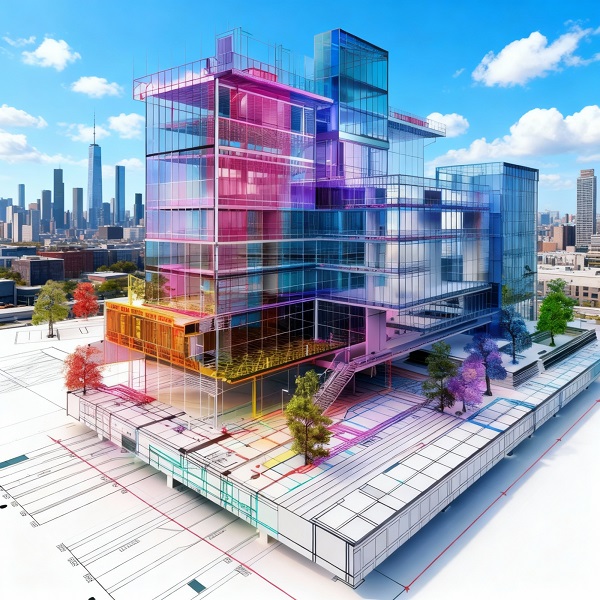
CFD is a simulation-based method that shows and measures the movement of contaminants, heat transfer, and airflow in constructed settings. It helps engineers, architects, and facility designers to make well-informed, data-driven choices that maximise energy efficiency, system performance, and comfort.
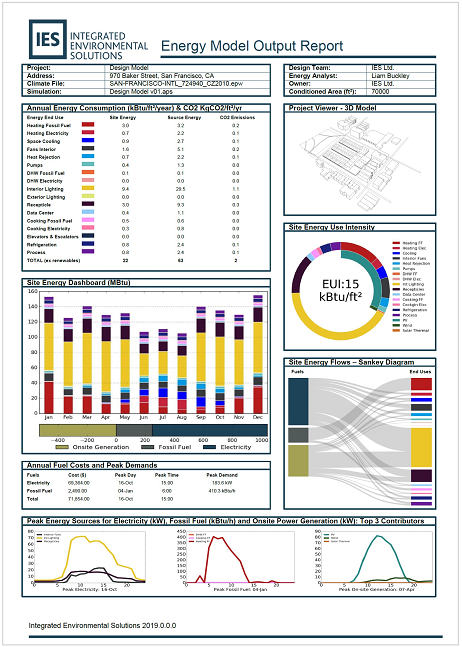
Our CFD Report offers both analytical and graphical insights to enhance design validation and performance evaluation by fusing in-depth analysis with visual simulations.
Project Summary
3D Airflow Visualisation
Temperature and Velocity Profiles
Pressure Distribution Maps
CFD Summary Dashboard
Smoke and Contaminant Dispersion Analysis
Ventilation Effectiveness Chart
Thermal Comfort Index (PMV/PPD)
Our CFD analysis guides evidence-based advances in HVAC validation and outdoor wind performance studies, offering precise insights to design safe, comfortable, and efficient buildings.

Improve the distribution and positioning of diffusers.

Model and control the behaviour of pollutants, heat, and smoke.

Examine pressure zones and natural ventilation before building.

Predict how the environment will behave under different circumstances.

Optimise ventilation and exhaust systems for efficiency.
We offer specialized CFD analysis across two primary domains: Internal Space and External (Façade/Site) studies.

Thermal Comfort Assessment: To improve occupant well-being, forecast temperature variations and airflow patterns.
HVAC System Performance: Verify ventilation, pressure, and air distribution for the best possible design.
Contaminant and Smoke Dispersion: Model the spread of smoke, fumes, or pollutants in order to optimise exhaust and safety systems.
Natural Ventilation & Passive Cooling: Choose window and vent arrangements that optimise comfort and airflow.
Pedestrian Wind Comfort: Assess wind speed and turbulence for both safety and outdoor comfort.
Wind Loading on Façades: Determine pressure coefficients for optimal cladding and structural design.
Stack Effect and Buoyancy: Measure airflow caused by temperature variations in atriums and shafts.
Pollutant Dispersion (Intake/Exhaust): Avoid air re-entrainment close to intakes and make sure exhaust discharge is safe.
We optimise airflow performance and comfort in every design by combining our expertise in environmental engineering with advanced modelling.


Our group of professional analysts uses international CFD standards to guarantee accurate, high-fidelity simulation outcomes.

We collaborate with architects, MEP engineers, and sustainability experts to create integrated design solutions.

We provide lucid, graphical CFD reports that make difficult airflow behaviour easier to understand and enable confident decision-making.

We provide precise, verified airflow and heat transfer models using OpenFOAM, SimScale, and Ansys Fluent.



CFD analysis provides quantifiable benefits throughout your building's design and operation lifecycle.

Make sure that indoor spaces are comfortable and that the temperature is distributed evenly.

To safeguard residents and property, simulate the passage of smoke and pollutants.

Using actual airflow data, design effective HVAC and ventilation systems.

Use verified performance data to support safety, WELL, and LEED certifications.

By using precise forecasts, reduce fan energy and system oversizing.